
General Dentistry
Gum Disease Treatment in Joyner for Bleeding, Swollen Gums
Bleeding gums are not normal. They are your body flagging a problem that affects one in three Australian adults — and Queensland has the highest rate in the country. If you have been putting off a dental visit, a gum health assessment is a practical first step. Serving patients from Joyner, Strathpine, Warner, Cashmere, Albany Creek, Brendale, and Eatons Hill.


THE SILENT PROBLEM
It Doesn’t Hurt Until It’s Serious — That’s What Makes It Dangerous
You notice a trace of pink on your toothbrush. Maybe your gums look a little redder than usual, or they feel tender after flossing. You rinse, move on, and forget about it by breakfast. That pattern — notice, dismiss, repeat — is how gum disease quietly progresses in roughly 30% of Australian adults. In Queensland, the figure is even higher: 37% of adults are affected by moderate or severe periodontitis, the highest rate of any state.
The important thing about gingivitis: it is completely reversible with professional treatment and consistent home care.
In its early stage, called gingivitis, the damage is limited to inflamed gum tissue. Plaque builds along the gum line, bacteria irritate the tissue, and your gums respond with redness and bleeding. The important thing about gingivitis: it is completely reversible with professional treatment and consistent home care. No permanent damage has occurred.
Left unchecked, gingivitis can progress to periodontitis — a stage where bacteria migrate below the gum line and your body’s own inflammatory response begins breaking down the bone and connective tissue that hold your teeth in place. That bone loss is permanent. It can be stabilised, but it cannot be reversed. This is why the timing of your first visit matters more than most people realise.
The best defence against gum disease is consistent 6-monthly check-ups and cleans. If teeth have already been lost due to severe periodontitis, dental implants may be an option once gum health is restored. Speak to our AHPRA-registered team to develop a personalised gum health plan.
THE BIGGER PICTURE
Why Your Dentist Asks About Your Health History

It might seem odd that a dental appointment starts with questions about diabetes, heart conditions, or pregnancy. But a growing body of peer-reviewed research suggests the inflammation driving gum disease does not stay in your mouth — it may influence, and be influenced by, conditions elsewhere in your body.
Studies describe a bidirectional relationship between periodontitis and type 2 diabetes: treating periodontal disease may support better blood sugar management, though individual outcomes vary. Multiple studies have also found associations between severe periodontitis and cardiovascular events, suggesting chronic oral inflammation may contribute to systemic inflammatory markers. And up to 75% of pregnant women experience pregnancy gingivitis, with some research linking periodontal disease during pregnancy to adverse outcomes.
None of this means gum disease causes these conditions — the evidence describes associations, not direct causation. But it does explain why your dental team takes your health history seriously and why a gum health assessment looks at more than just your teeth.
Research from Queensland shows 37% of adults in the state are affected by moderate or severe periodontitis — the highest rate nationally.
AIHW, NSAOH 2017–18
These associations are based on published peer-reviewed research and do not imply direct causation. Your dental team can discuss how your oral health fits into your broader health picture.
Noticed Any of These Patterns A Gum Health Assessment Takes the Guesswork Out.
WARNING SIGNS
Six Things Your Gums Might Be Trying to Tell You
Most of these are easy to dismiss on their own. If two or more sound familiar, a professional assessment can give you a clear answer.
Bleeding when brushing or flossing
Healthy gums do not bleed during routine care. Consistent bleeding — even a small amount — indicates gum tissue inflammation and is the most common early sign of gingivitis.

Swollen, red, or tender gums
Healthy gum tissue is pink, firm, and sits snugly against your teeth. If your gums look puffy or feel sore to the touch, your body is responding to bacteria building up along the gum line.
Receding gum line
If your teeth appear longer than they used to, or you can see more of the tooth root, your gum tissue may be pulling away — a sign that bone loss underneath has already started.
Persistent bad breath
Ongoing bad breath that does not respond to brushing or mouthwash often points to bacteria accumulating in periodontal pockets below the gum line — areas your toothbrush cannot reach.
Loose or shifting teeth
Teeth that feel slightly mobile, or a bite that has changed over time, may indicate that the bone supporting your teeth has started to break down. This is typically a sign of progressed periodontitis.
Pain or discomfort when chewing
Chewing should not hurt. If biting down causes tenderness, it may be because the structures supporting your teeth — gum tissue, bone, and connective fibres — are compromised.
HOW WE HELP
What Happens When You Come In
Your dental team handles the majority of gum disease cases in-house, from early gingivitis through to moderate periodontitis. For complex surgical situations, a referral to a specialist periodontist ensures you receive the right level of care.
A thorough gum health assessment
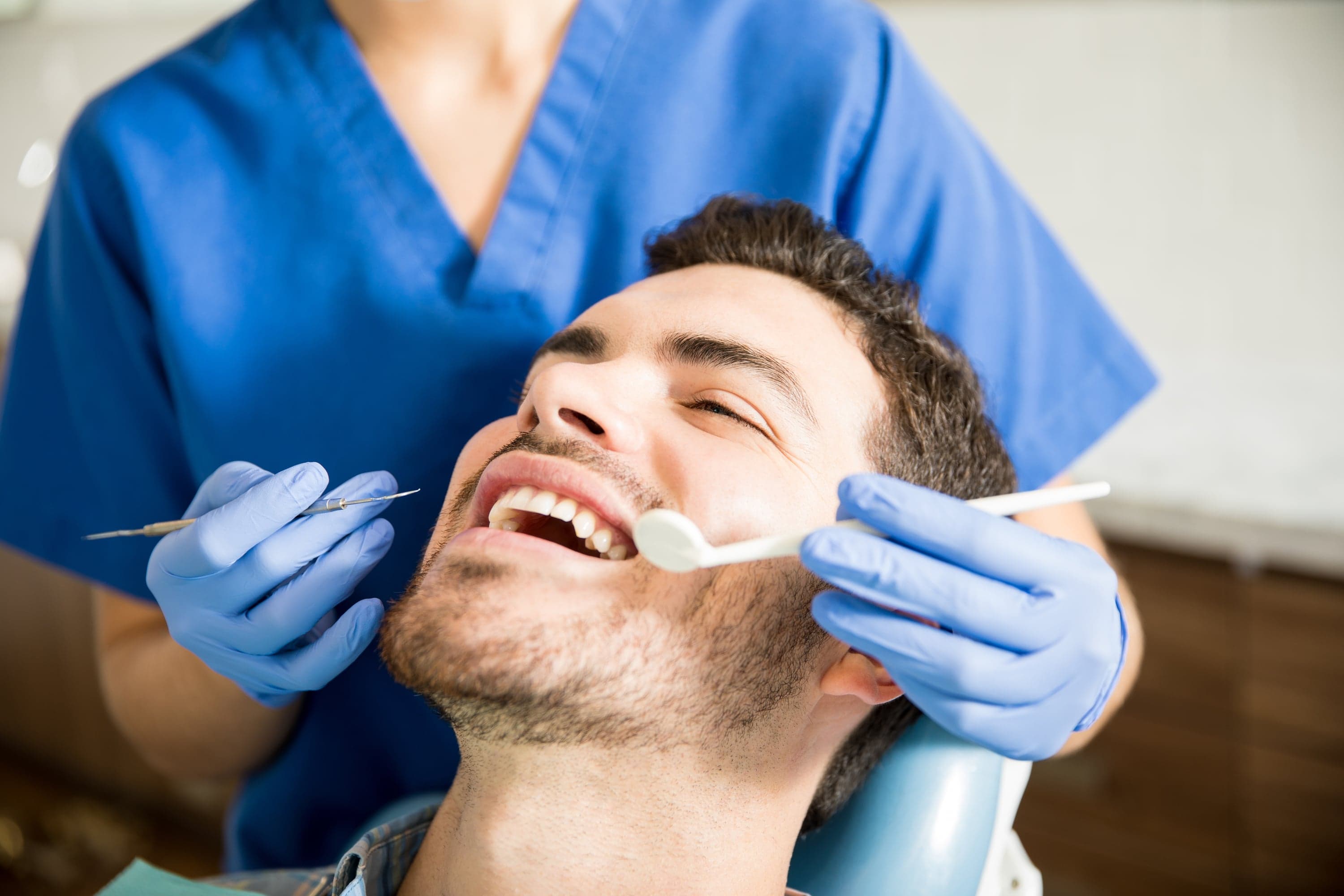
Your dentist measures pocket depths around each tooth, checks for bleeding on probing, and takes digital X-rays to assess bone levels. This establishes exactly where things stand and determines the stage and grade of any gum disease present.
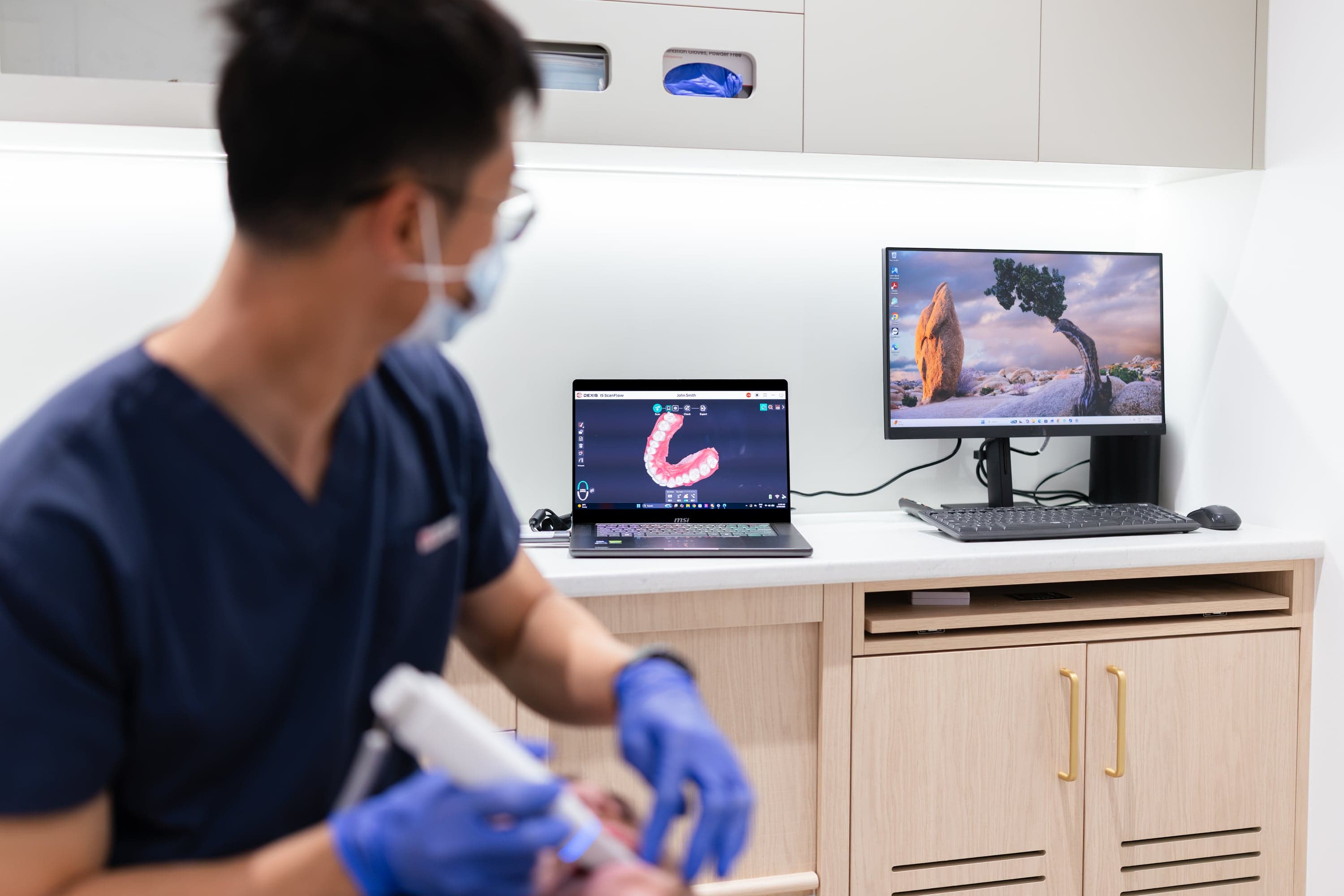
Professional cleaning — standard or deep, depending on what is needed
For gingivitis, a standard scale and clean removes plaque and tartar above and below the gum line. For periodontitis, scaling and root planing goes deeper — your dental team cleans bacterial deposits from root surfaces and smooths them to discourage reattachment. Local anaesthesia is available for comfort during deeper cleaning.
A written treatment plan you can take home
Before anything proceeds, you receive a clear written plan covering what was found, what is recommended, and what each step costs. No verbal estimates, no surprises. If you want time to consider your options, the plan is yours to review at your own pace.

Tailored home care guidance
Your dental team walks you through brushing technique adjustments, interdental cleaning tools suited to your specific gaps and pocket depths, and any supplementary products that may help. This is not generic advice — it is based on what was found during your assessment.
Ongoing maintenance and re-evaluation
After initial treatment, your dental team schedules a re-evaluation at six to eight weeks to measure tissue response. From there, a maintenance programme is set — typically every three to four months rather than the standard six. If sites have not responded adequately, a referral to a specialist periodontist is arranged.
COMMON QUESTIONS
Straight Answers About Gum Disease
The questions patients ask most — answered without jargon, without hedging, and with sources where they matter.

Your Gums Have Been Patient. Now It’s Your Turn.
Your $179 appointment includes a comprehensive examination with full gum health assessment, pocket depth measurements, digital X-rays where clinically needed, and a written summary of findings. Whether it has been six months or six years, the appointment starts the same way: no judgement, just a clear picture of where things stand.