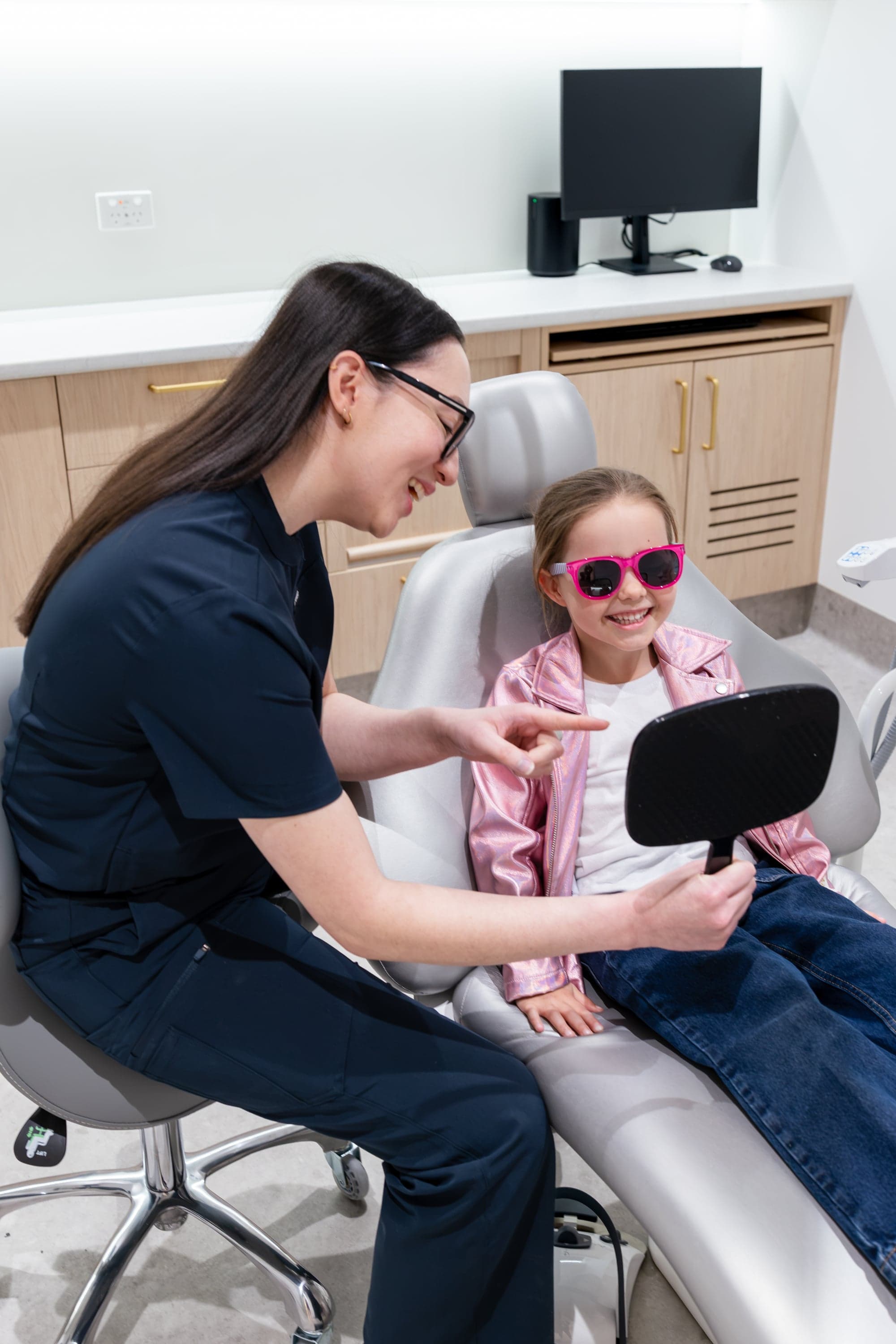
Children's Dentistry
Children's Dentistry in Joyner — Building Habits That Last a Lifetime, Starting With the Very First Tooth
Your child's relationship with dental care starts now. At Joyner Family Dental, check-ups are unhurried, explanations are age-appropriate, and nobody gets told off for being nervous. Whether it's a first-tooth visit for your toddler or a mouthguard fitting for your teenager, your dental team takes the time to make every visit a positive one. Serving Joyner, Strathpine, Warner, Cashmere, and Albany Creek.


Why it matters early
Small Teeth, Big Foundations — Why Early Dental Care Changes Everything
You wouldn't wait until your child failed a subject to think about their education. Dental care works the same way — the earlier you start, the less there is to fix later. Regular visits from the first tooth help your child see the dentist as a normal part of life, not something to dread.
Baby teeth matter more than most parents realise. They hold space for the permanent teeth growing underneath, guide jaw development, and affect how your child eats, speaks, and smiles. When a baby tooth is lost too early to decay, the teeth on either side can drift into the gap — potentially creating alignment issues that are more complex and costly to address later.
Forty-two per cent of Australian children aged four to ten have experienced cavities. In Queensland, the challenge is compounded — only 76% of the population has access to fluoridated water, compared to the national average of 89%. That's one reason your dental team may recommend fluoride treatments and fissure sealants as part of your child's preventive plan.
The Australian Dental Association recommends a child's first dental visit when the first tooth appears, or by their first birthday — whichever comes first. This isn't about treatment. It's about establishing a dental home, getting baseline observations, and giving you practical advice on brushing, diet, and dummy habits before problems have a chance to start.
We also offer custom sports mouthguards for children and regular check-up and clean appointments designed to keep their dental visits positive. For anxious young patients, gentle sedation options are available.
What your dentist checks for
Every Visit Is Tailored to Where Your Child Is At
Decay and cavity risk
Your dentist checks each tooth for early signs of decay — white spots, discolouration, soft enamel. Catching a small cavity in a baby tooth is a five-minute fix. Missing it can mean pain, infection, and an extraction that affects the permanent teeth waiting underneath.
All agesBite and jaw development
As adult teeth come through, your dentist monitors spacing, alignment, and how the upper and lower jaws meet. If something looks like it may need orthodontic attention, you'll know early — before the window for simpler intervention closes. An orthodontic evaluation is typically recommended by age seven.
From age 6Fissure sealants for new molars
When permanent molars emerge around age six, their deep grooves are difficult for a child's toothbrush to reach. Fissure sealants are a thin, non-invasive coating applied to these surfaces to help protect them from decay. Around 27% of Australian children aged six to fourteen have at least one sealant — your dentist will let you know when the timing is right.
Age 6+Gum health
Gingivitis — red, swollen, or bleeding gums — affects around one in five Australian children aged five to fourteen. Your dental team checks gum health at every visit and shows your child (and you) how to brush and floss in the spots that matter most.
All agesHabits that affect development
Thumb sucking, dummy use, tongue thrust, and mouth breathing can all influence how your child's teeth and jaw develop. Your dentist assesses these habits without judgement and offers practical, age-appropriate advice on when and how to manage them.
Toddlers to age 8Your Child's First Visit Is Easier Than You Think
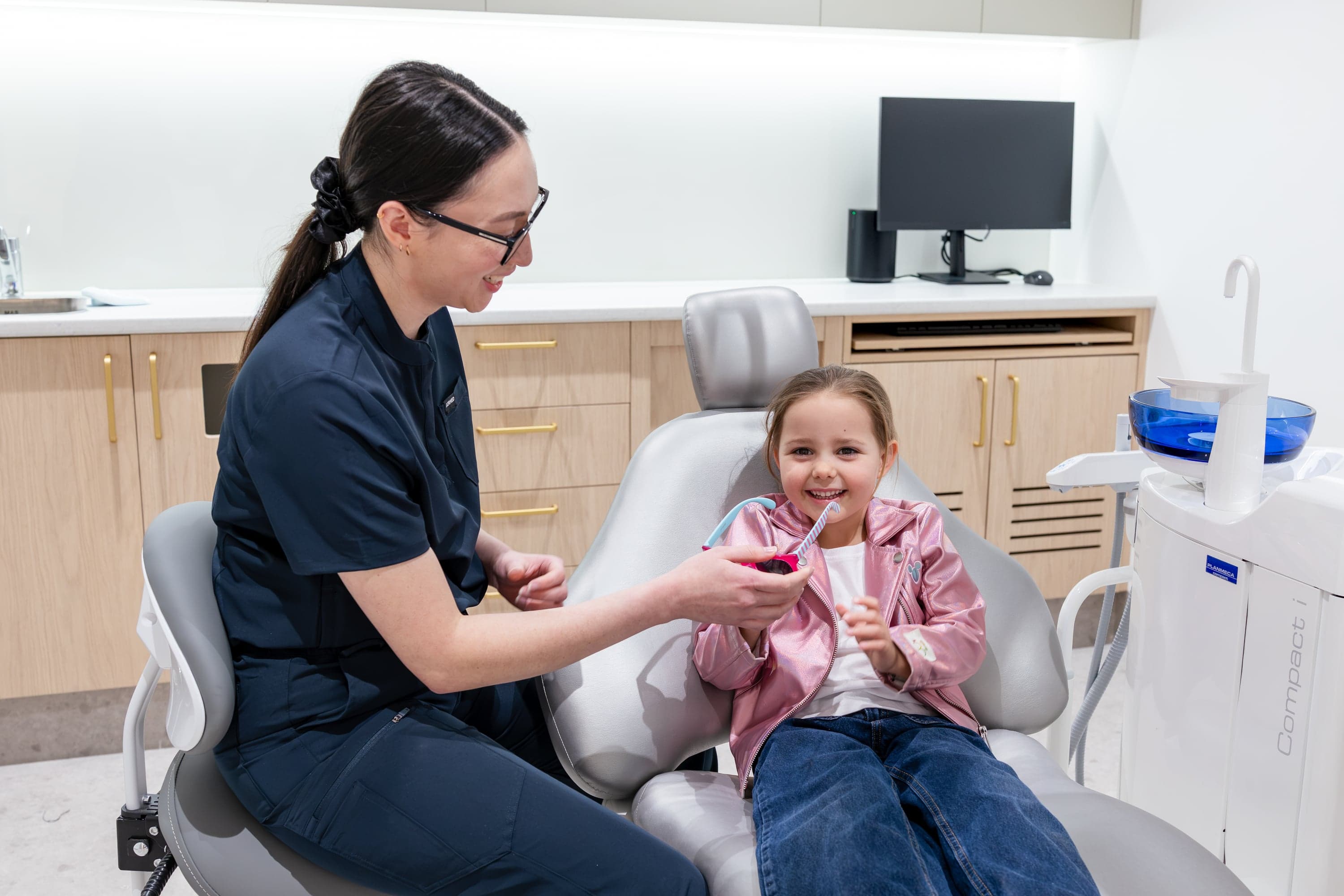
A typical children's check-up takes about thirty minutes. Your child gets to sit in the chair, see the tools, and ask questions before anything happens. No surprises, no rushing — and you're welcome to stay right beside them the whole time.
Government benefits
Your Child May Be Eligible for Up to $1,158 in Dental Benefits
The Child Dental Benefits Schedule (CDBS) is a government program that helps eligible families access basic dental services for their children through Medicare. One in five parents don't know their child is eligible, so it's worth checking.
Child Dental Benefits Schedule (CDBS) 2026
$1,158 over 2 consecutive calendar years
Your child may be eligible if they are aged 0 to 17, are eligible for Medicare, and your family receives an eligible government payment — including Family Tax Benefit Part A, Parenting Payment, or other qualifying payments.
What's covered
- Examinations and X-rays
- Teeth cleaning
- Fissure sealants
- Fillings
- Tooth extractions
- Root canal treatment
- Partial dentures
What's not covered
- Orthodontic treatment (braces)
- Cosmetic dental work
- Dental services provided in a hospital
Joyner Family Dental can bulk-bill covered CDBS services for eligible children, subject to Medicare eligibility and remaining balance.
You can check your child's eligibility through your myGov account, by calling Medicare on 132 011, or by asking your dental team at your next appointment — they can look it up for you on the spot.
A welcoming practice for children
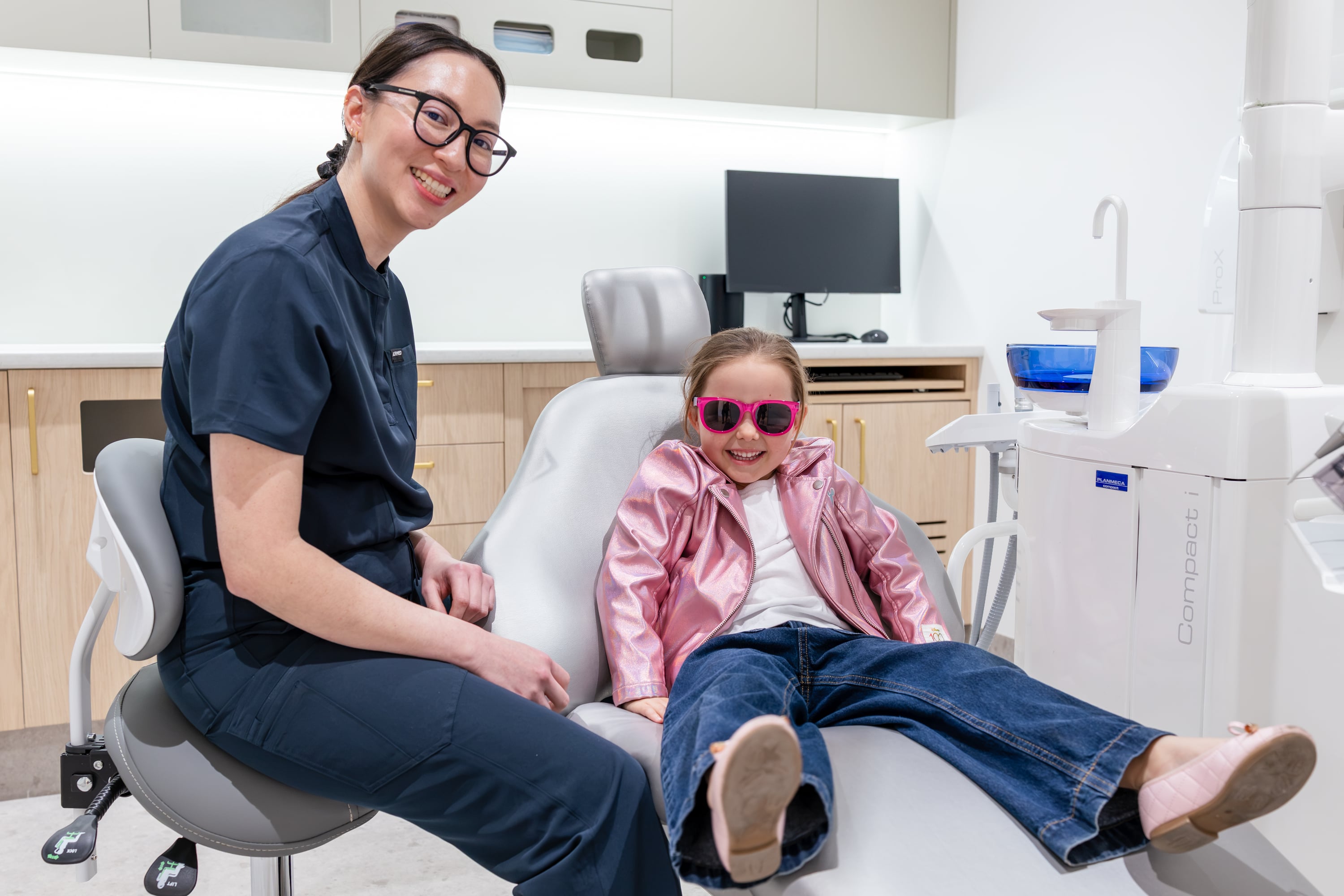
A practice your child won't dread — and might actually look forward to.

A visit they won't dread
How Your Dental Team Helps Your Child Feel at Ease
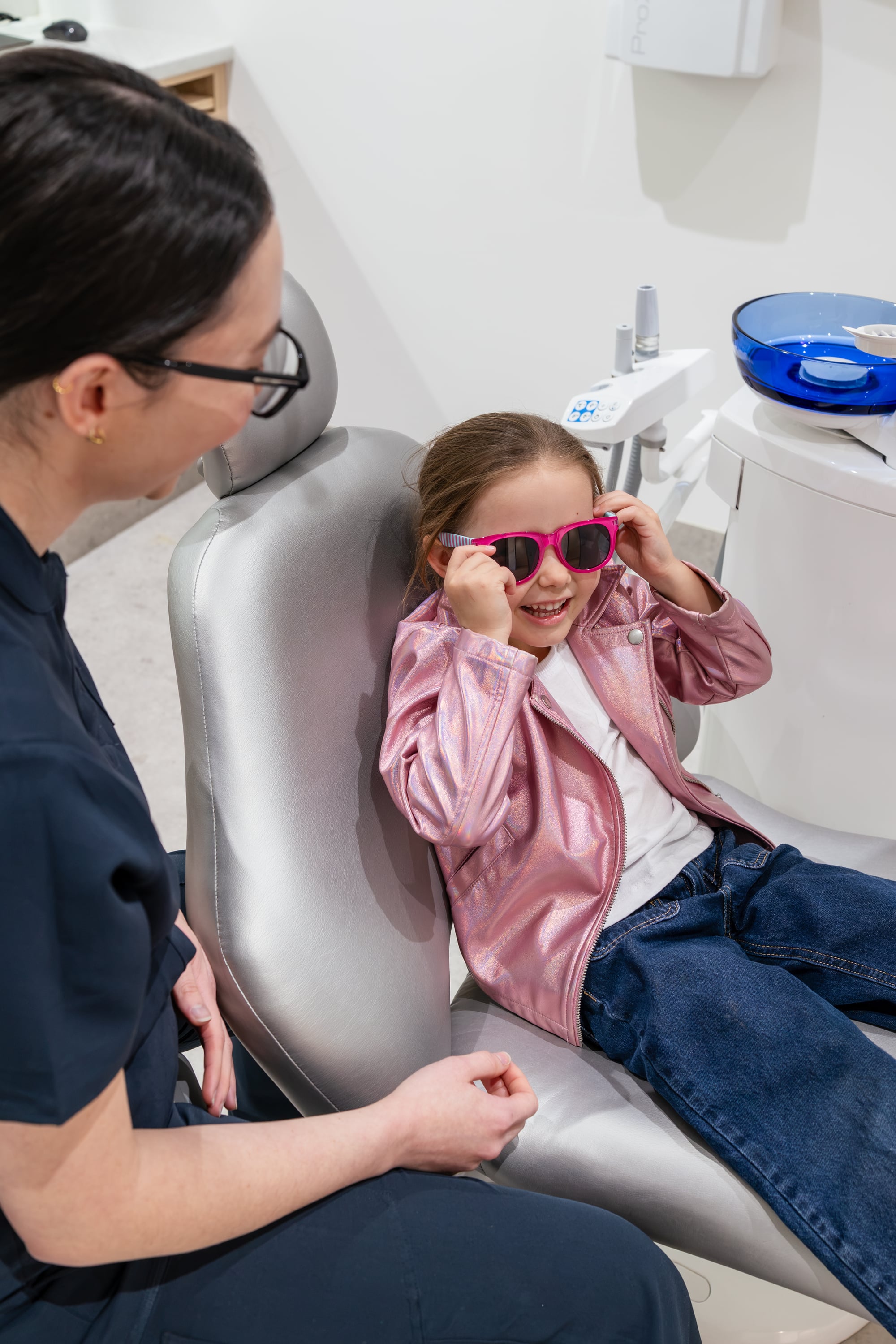
Nearly 20% of school-aged Australian children experience dental anxiety. Your dental team uses evidence-based techniques — not bribery, not force — to help your child feel safe and in control.
Tell, show, do
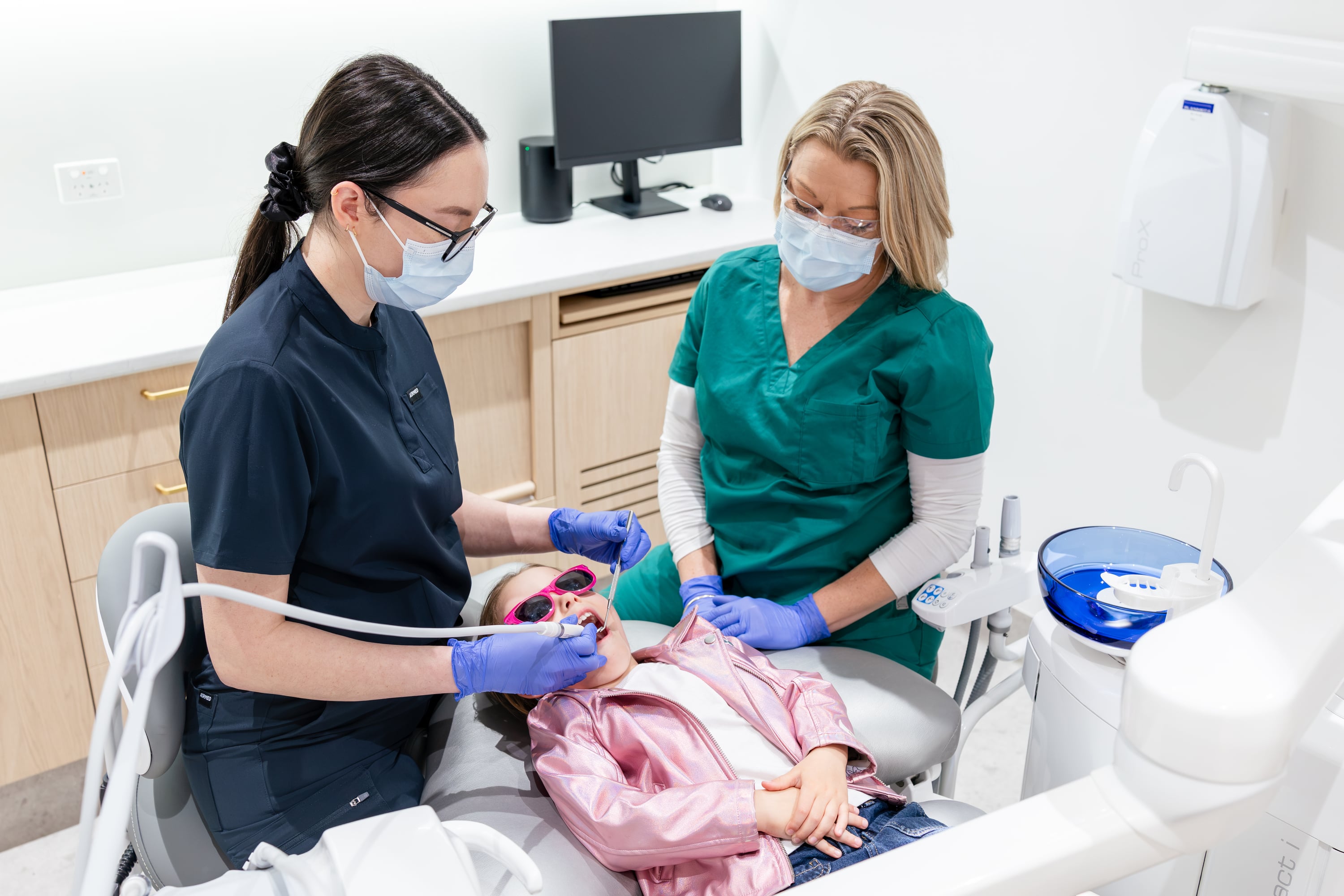
Before anything touches your child's teeth, your dentist explains what's going to happen in simple, age-appropriate language. Then they show the tools — the mirror, the little camera, the 'tooth counter.' Then they do it. No surprises.
Your child sets the pace
If your child needs to stop, they raise a hand. If they need a break, they get one. Your dental team never rushes through a visit — especially a first one. Building trust takes longer than filling a tooth, and it's a better investment.
You stay right there
Parents are welcome in the treatment room for the entire visit. For younger children, you can hold their hand or sit them on your lap while the dentist takes a look. Your presence makes a bigger difference than any distraction technique.
Positive endings
Every visit ends on a high note. Your child chooses a sticker, gets a 'well done' that's genuinely earned, and leaves knowing that the dentist is a place where good things happen — not a threat that gets used when they won't brush their teeth.
Common questions from parents
Answers to the Questions Parents Ask Most
From our practice
Related General Dentistry Services
The Best Time to Start Was Their First Tooth. The Second Best Time Is Today.
You're already doing the right thing by looking into this. Whether your child is six months old or sixteen years old, your dental team will meet them where they are — no lectures about what should have happened sooner. Just good care, honest advice, and a visit they won't dread. call first to confirm availability.