Restorative Dentistry
Dentures in Joyner — Fitted to Your Life, Not Just Your Mouth
Losing teeth changes how you eat, how you speak, and how you feel about showing up. Modern dentures are designed to restore all three — and at Joyner Family Dental, your dental team takes the time to get the fit right.


01 / Understanding dentures
What Dentures Actually Are — and What They Are Not
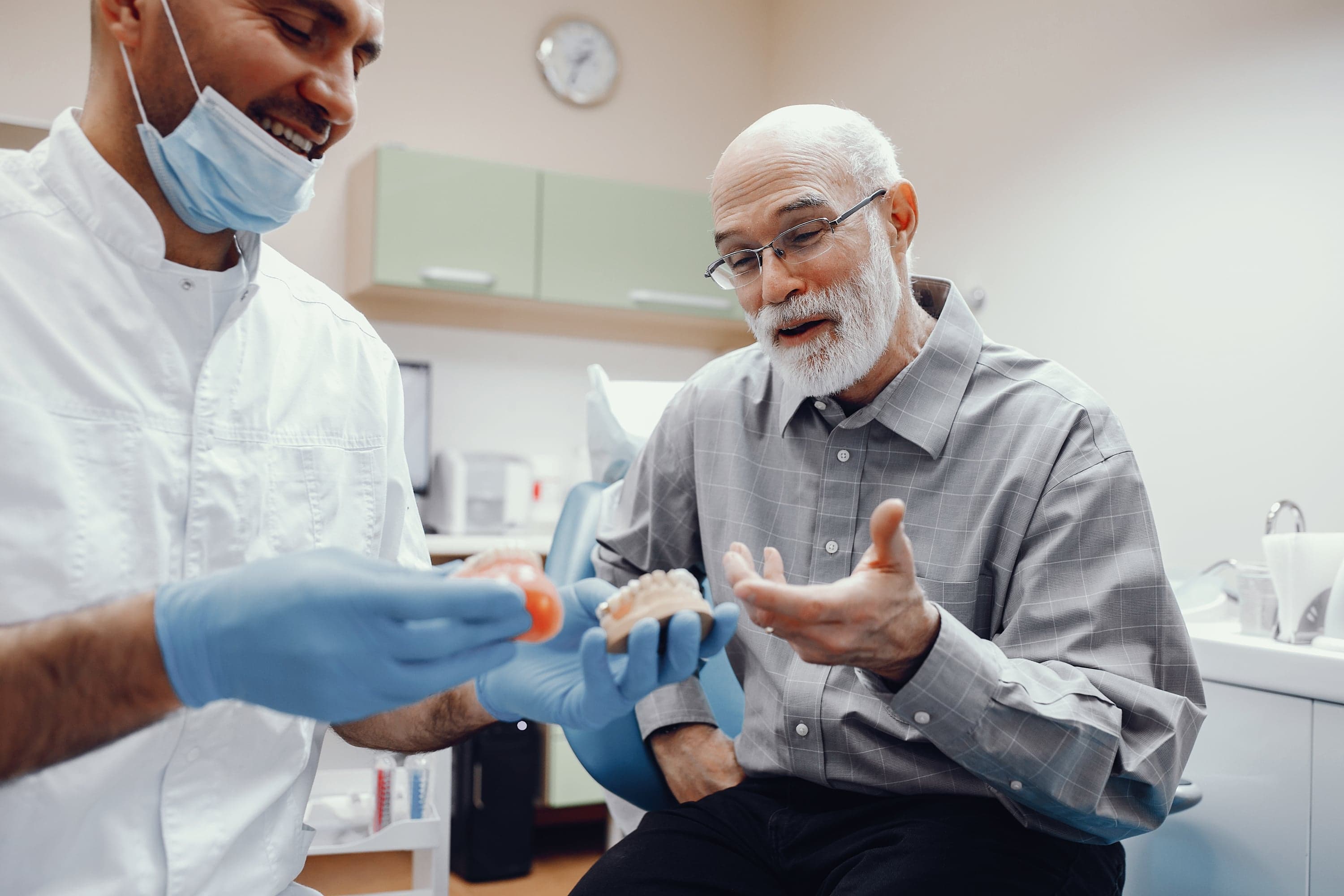
You have been avoiding certain foods for months. You cover your mouth when you laugh. You rehearse how to smile in photos so the gap does not show. That is what missing teeth do — they take up space in your head long after they have left your mouth. A denture is a removable prosthetic that replaces those missing teeth and the surrounding gum tissue, held in place by suction, clasps, or implants. You take it out to clean it, and you put it back in to eat, talk, and smile.
If you are picturing your grandmother's teeth sitting in a glass on the bedside table, you are not alone. That image has shaped how most people think about dentures. But materials have changed. Fabrication techniques have changed. The teeth themselves — acrylic or porcelain, shade-matched to your natural colour — look nothing like they did thirty years ago.
A well-made denture does not just fill a gap. It supports your facial muscles, prevents the remaining teeth from drifting, and gives you back the confidence to eat a meal without thinking about it. It is not a compromise — it is a practical, proven solution for people who have lost some or all of their teeth.
If you’re looking for a permanent fixed solution, dental implants or implant-retained dentures may be suitable. We also offer flexible payment plans including DentiCare monthly instalments. Speak to our dental team about which denture type is right for you.
Australian adults are missing one or more teeth
Source: AIHW National Study of Adult Oral Health 2017-18

02 / Your options
Five Types of Dentures — Each Designed for a Different Situation
Your dentist will recommend the type that matches your clinical situation, your lifestyle, and your budget. Here is what each option involves.

Full Dentures
When all teeth are missing in one or both arches
A full denture replaces an entire arch — upper, lower, or both. The upper denture covers the palate and is held in place by suction against the gum tissue. The lower denture sits on the ridge and relies on muscle control and, if needed, a small amount of adhesive. Full dentures are the most common type and the most practical way to replace a complete arch of missing teeth without surgical intervention.
- Replaces all teeth in one arch
- Custom shade-matched acrylic teeth
- Multiple fitting appointments included
- Reline service available as gums change over time
Recommended for
Patients missing all teeth in an arch who want a non-surgical solution

Partial Dentures
When some natural teeth remain
A partial denture fills the gaps left by missing teeth while clipping onto your remaining natural teeth for stability. It can be made from acrylic (lighter, lower cost, suits temporary use) or chrome-cobalt metal framework (thinner, stronger, more durable for long-term wear). A well-designed partial prevents the remaining teeth from drifting into the gap and distributes chewing forces more evenly across the mouth.
- Clips onto existing healthy natural teeth
- Acrylic or chrome-cobalt metal framework options
- Prevents remaining teeth from drifting
- Can be adjusted as your mouth changes
Recommended for
Patients with several missing teeth who still have healthy natural teeth to support the denture

Immediate Dentures
When you need teeth on the same day as extractions
An immediate denture is fabricated before your teeth are removed and placed on the same day as your extractions, so you are never without teeth during the healing period. Because your gums and jawbone change shape as they heal, an immediate denture typically requires a reline within three to six months to restore a proper fit. Think of it as a functional option while you wait for the permanent denture to be made to your healed gum contours.
- Placed on the same day as tooth extractions
- Prevents social discomfort of a gap during healing
- Requires a reline once initial healing is complete (3–6 months)
- Can be converted to or replaced by a conventional denture
Recommended for
Patients who need extractions and want to maintain their appearance throughout the healing phase

Implant-Supported Dentures
When you want a denture that stays put
An implant-supported denture clips onto two to four titanium implants placed in your jawbone. It still comes out for cleaning, but during the day it stays anchored — no slipping, no adhesive, no worrying about it moving when you eat or laugh. For patients who already wear a conventional denture and are tired of it shifting, this can be a practical middle ground between a conventional denture and a full fixed restoration. The implants also help preserve jawbone density at the implant sites.
- Clips onto 2–4 dental implants
- Stays anchored during eating and talking
- Removable for cleaning at night
- Helps preserve jawbone density at implant sites
Recommended for
Patients who want significantly more stability than a conventional denture without the cost of fully fixed teeth
Any surgical or invasive procedure carries risks. Before proceeding, you should seek a second opinion from an appropriately qualified health practitioner.

Premium Dentures
When appearance and long-term wear matter most
Premium dentures use higher-grade acrylic bases and individually selected, characterised teeth for a more natural, lifelike result. The gum colouring is more detailed, the teeth are arranged with subtle variation in position and shading, and the overall result is a denture that is difficult to distinguish from natural teeth at normal conversational distance. If you want the most aesthetic outcome possible, the higher-specification materials and additional time involved are worth discussing with your dental team.
- Higher-grade acrylic with detailed gum colouring
- Individually selected and characterised teeth
- More natural tooth arrangement and shade gradation
- Greater durability and improved stain resistance
Recommended for
Patients who want the most natural-looking result and are prepared to invest in a higher-specification denture
03 / The process
How Your Dentures Are Made — From First Impression to Final Fit
Consultation and Assessment
Your dentist examines your mouth, takes digital X-rays if needed, and discusses your goals — what you want to eat, how you want to look, and what your budget allows. If extractions are needed before dentures, those are planned and quoted separately.

Consultation and Assessment
Your dentist examines your mouth, takes digital X-rays if needed, and discusses your goals — what you want to eat, how you want to look, and what your budget allows. If extractions are needed before dentures, those are planned and quoted separately.
Impressions, Bite Registration, and Shade Match
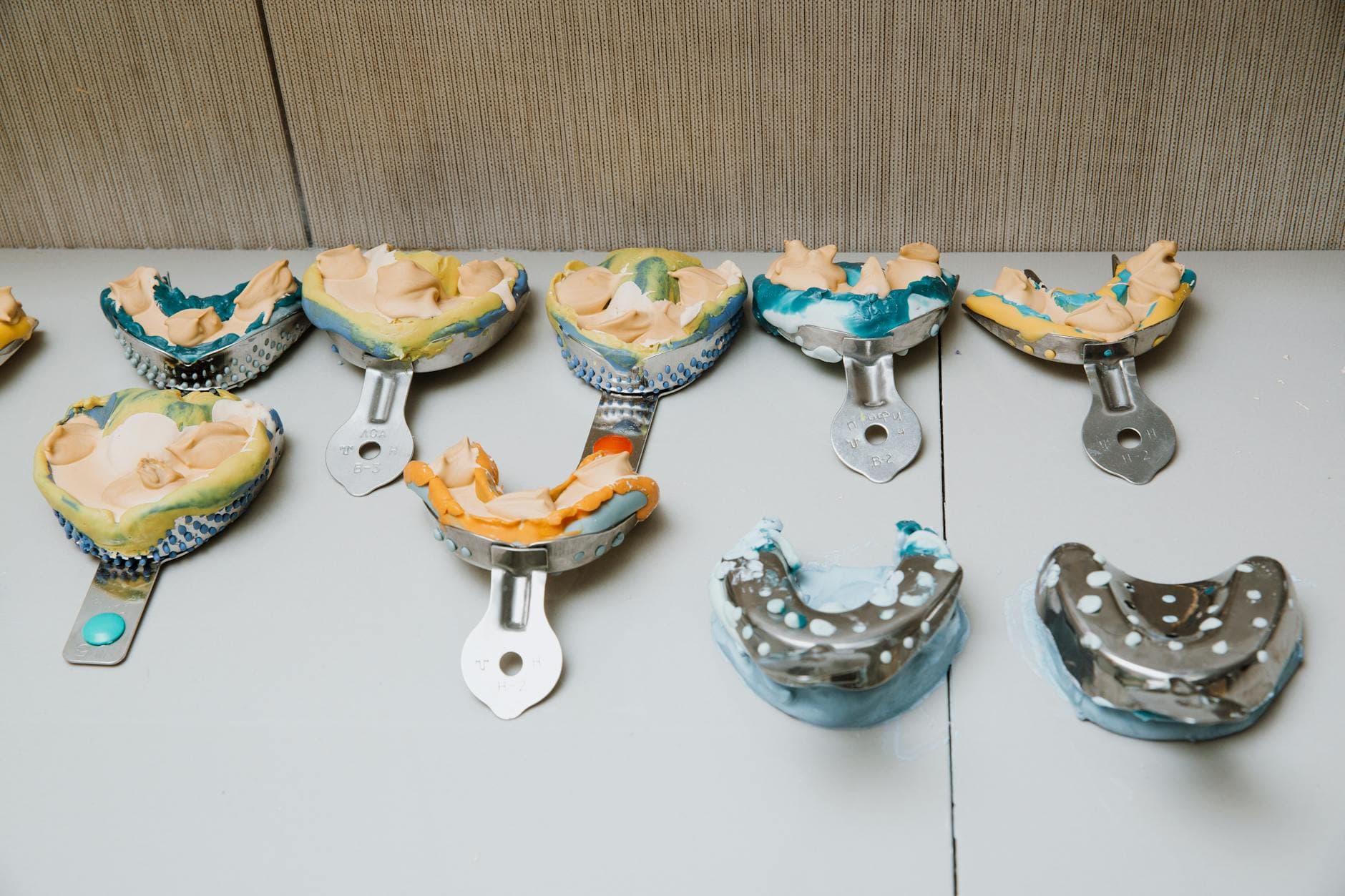
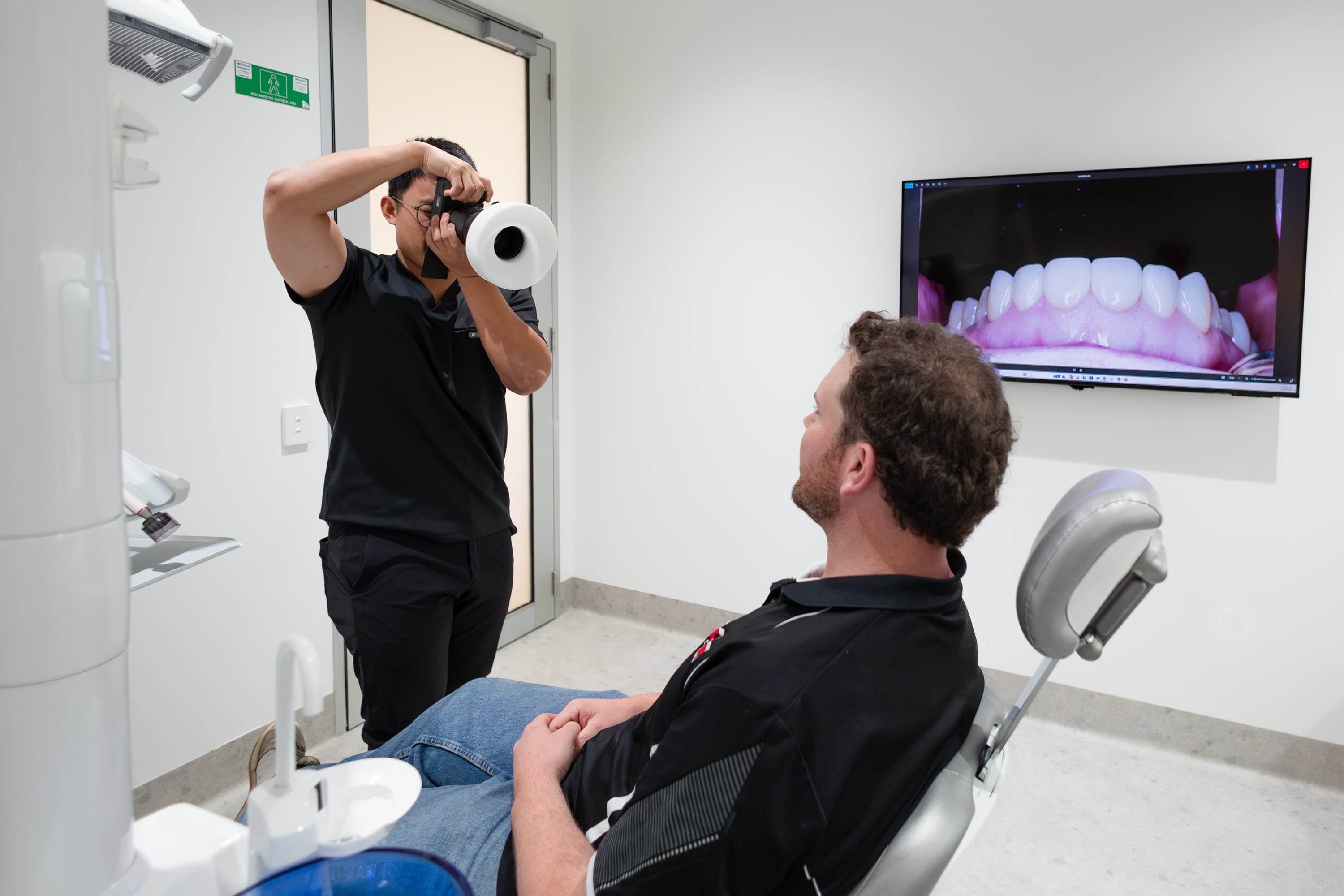
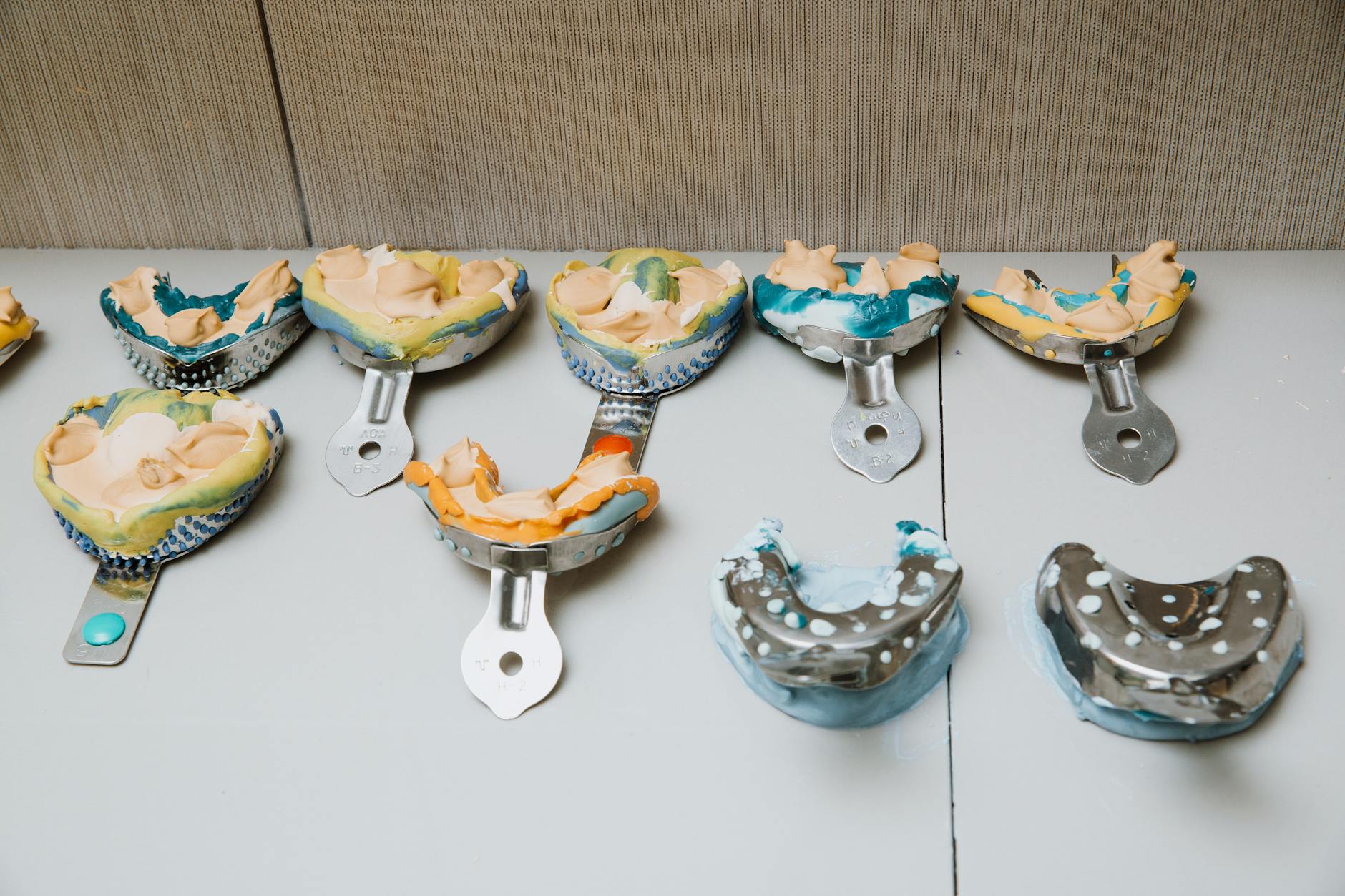
Accurate impressions of your gums and any remaining teeth are taken — digital scanning may be available depending on your clinical situation. A bite registration records how your upper and lower jaws meet, and shade matching is completed so the teeth can be selected to complement your natural colouring and skin tone. These records go to the dental laboratory where your denture is handcrafted to fit your mouth precisely.
Impressions, Bite Registration, and Shade Match
Accurate impressions of your gums and any remaining teeth are taken — digital scanning may be available depending on your clinical situation. A bite registration records how your upper and lower jaws meet, and shade matching is completed so the teeth can be selected to complement your natural colouring and skin tone. These records go to the dental laboratory where your denture is handcrafted to fit your mouth precisely.
Try-In Appointment
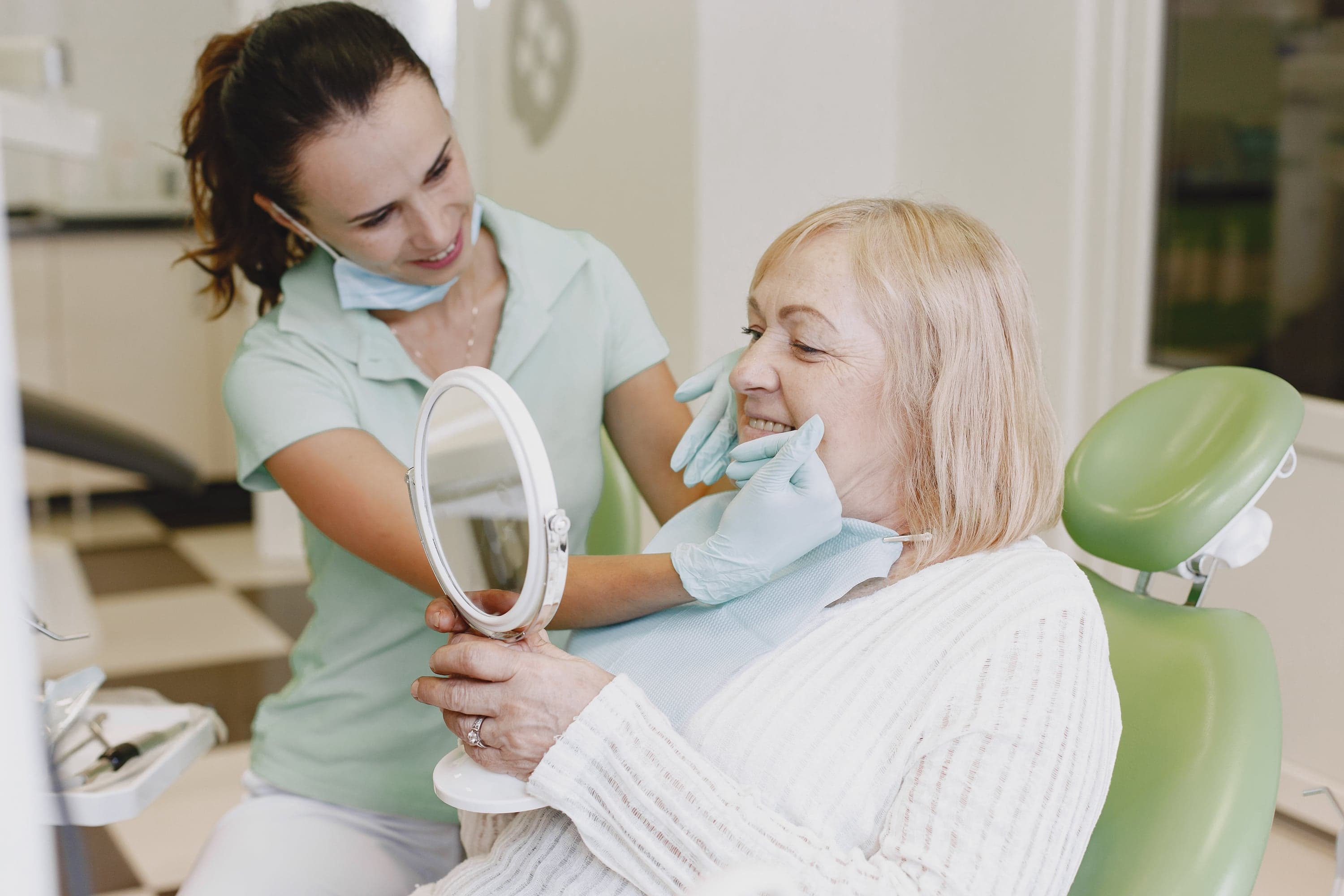
Before the final denture is made, you try a wax version with the teeth set in position. This is your chance to check the fit, the tooth colour, the shape, and the way it looks when you smile. Your dentist adjusts anything that does not feel right.
Try-In Appointment
Before the final denture is made, you try a wax version with the teeth set in position. This is your chance to check the fit, the tooth colour, the shape, and the way it looks when you smile. Your dentist adjusts anything that does not feel right.
Final Fitting and Adjustment
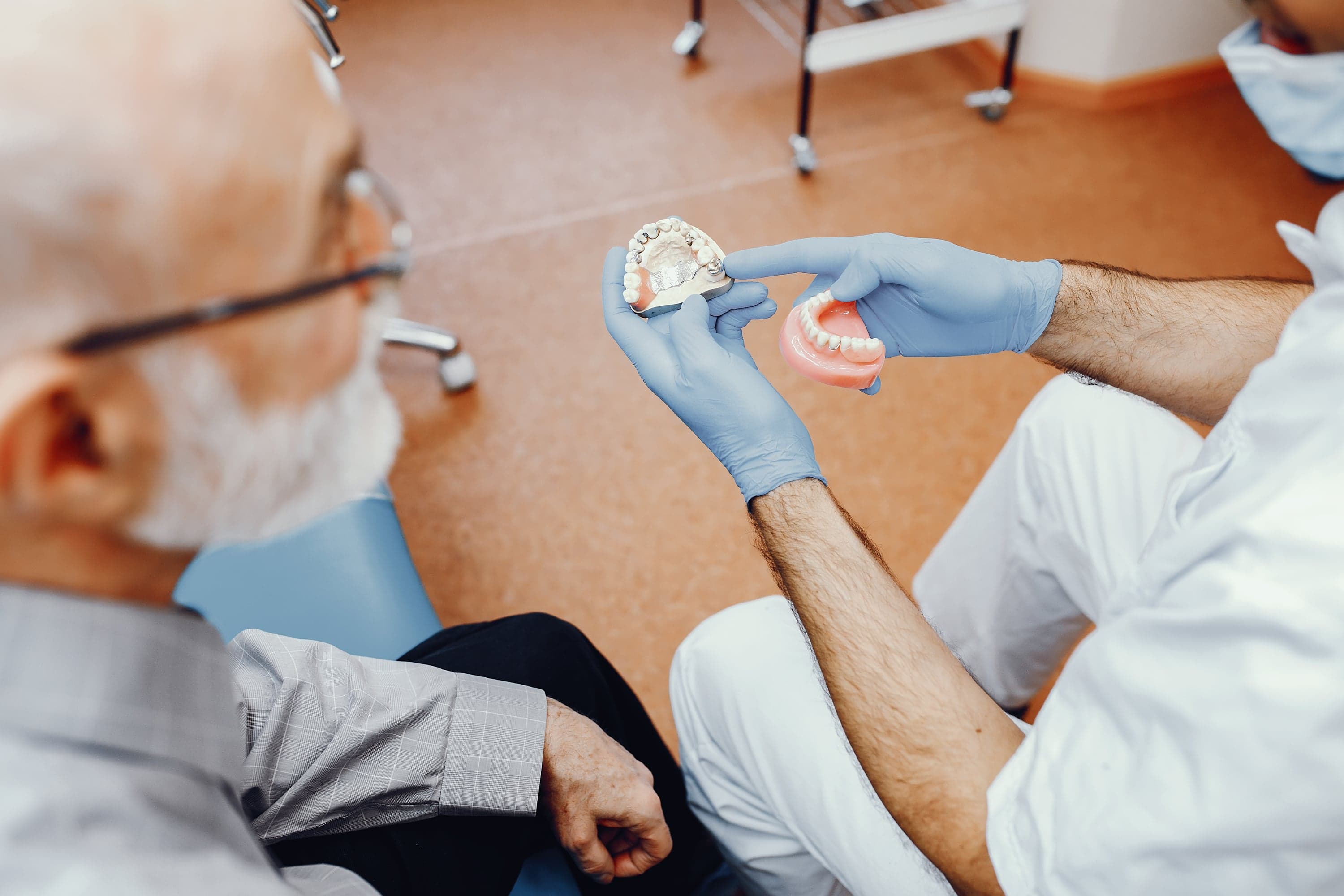
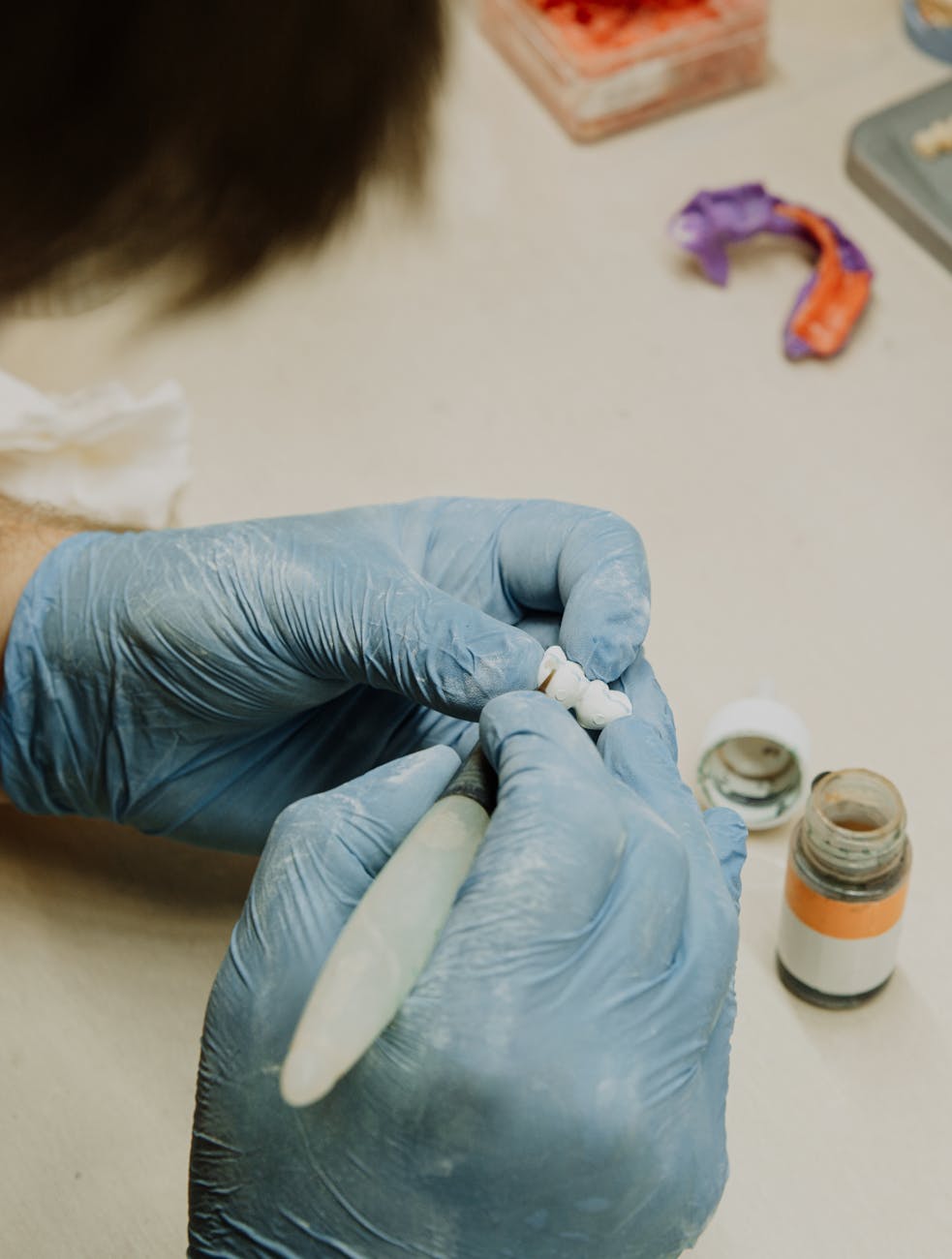
The finished denture is placed and thoroughly adjusted at the chairside. Your dentist checks the bite from multiple angles, makes refinements across all pressure points, and shows you how to insert, remove, and care for your new teeth. You will feel some pressure on first insertion — this is normal and settles as your gums adapt over the first two to three weeks.
Final Fitting and Adjustment
The finished denture is placed and thoroughly adjusted at the chairside. Your dentist checks the bite from multiple angles, makes refinements across all pressure points, and shows you how to insert, remove, and care for your new teeth. You will feel some pressure on first insertion — this is normal and settles as your gums adapt over the first two to three weeks.
Follow-Up Reviews
You return for a scheduled review at one week. Your dentist checks for sore spots, adjusts pressure points, and confirms the bite is settling correctly. A second review at four weeks allows further fine-tuning as your gums continue to adapt. Additional review appointments are included as standard — your comfort during the adjustment period is part of the service.

Follow-Up Reviews
You return for a scheduled review at one week. Your dentist checks for sore spots, adjusts pressure points, and confirms the bite is settling correctly. A second review at four weeks allows further fine-tuning as your gums continue to adapt. Additional review appointments are included as standard — your comfort during the adjustment period is part of the service.
Considering Dentures Your Dental Team Will Walk You Through It
A denture consultation includes a thorough assessment, a clear explanation of your options, and a written quote — no pressure, no surprises.
12%
of Australians aged 15 and over wear some form of denture
Source: AIHW National Study of Adult Oral Health 2017-18
Dentures are one of the most common prosthetic treatments in Australian dentistry. Your dental team has fitted hundreds — and every set is made to order, adjusted in-clinic, and followed up until the fit feels right.
Any surgical or invasive procedure carries risks. Before proceeding, you should seek a second opinion from an appropriately qualified health practitioner.
04 / Living with dentures
How to Care for Your Dentures — and What to Expect in the First Few Weeks
New dentures take time to get used to. Here is what to expect and how to look after them so they last.

The Adjustment Period
Your mouth needs two to four weeks to adapt. You may notice increased saliva, minor soreness on pressure points, and a feeling that the denture is too large. All of this is normal. If soreness persists beyond a few days, contact your dental team for an adjustment — do not try to file or modify the denture yourself.

Eating with New Dentures
Start with soft foods cut into small pieces — scrambled eggs, pasta, steamed vegetables, fish. Chew on both sides to keep the denture stable. Gradually introduce firmer foods over three to four weeks. Avoid biting directly with front teeth on hard foods like apples — cut them first.

Daily Cleaning Routine
Remove your dentures after every meal and rinse them under running water. Brush them once daily with a soft-bristle denture brush and a non-abrasive denture cleanser — never regular toothpaste, which is too gritty and scratches the surface. Soak overnight in water or a denture-soaking solution.

When to Use Adhesive
A well-fitting denture should not need adhesive. If you find yourself reaching for it regularly, that is a sign the denture needs relining or adjustment. A small amount of adhesive is fine for special occasions, but it should not be your daily fix for a loose fit.

Regular Check-Ups
Your gums and jawbone change shape over time, especially in the first year after extractions. Schedule a denture review every six to twelve months. Your dentist can reline the denture (add material to the fitting surface) to maintain a snug fit as your mouth changes.

What Not to Do
Do not sleep in your dentures — your gums need time to rest and recover. Do not use boiling water to clean them (it warps the acrylic). Do not try to repair a cracked denture with superglue — bring it in for a professional repair.

Overnight Soaking
Most dentures should be removed overnight and stored in water or a proprietary denture-soaking solution. This allows your gum tissue to rest and recover from the pressure of wearing a prosthesis throughout the day. Soaking also helps loosen plaque and staining that brushing alone may not remove. Check with your dental team — some denture types, particularly chrome-cobalt metal partials, have specific storage recommendations.

Signs Your Dentures Need Relining
Over time, your gums and underlying jawbone change shape — particularly in the first year after tooth extraction. If your denture rocks during chewing, slips during conversation, causes persistent sore spots, or requires increasing amounts of adhesive to stay in place, these are signals that a reline is needed. A reline involves adding new material to the fitting surface so the denture matches your current gum contours. This is a routine procedure, not a sign that anything has gone wrong with your denture.
05 / Costs and payment
Denture Costs at Joyner Family Dental
Denture costs depend on the type, the materials, and whether extractions or other preparatory work is needed. Here are our typical ranges for the dentures themselves.
Full Denture (per arch)
$1,200–$2,500
- Custom impressions and bite registration
- Try-in appointment with wax model
- Final fitting and adjustments
- Follow-up review visits included
Acrylic base with shade-matched teeth — typically 4-5 appointments over 3-4 weeks
Partial Denture
$800–$2,000
- Acrylic or chrome-cobalt framework
- Custom impressions and bite registration
- Try-in and final fitting
- Clasp design to suit remaining teeth
Chrome-cobalt is thinner and more durable — quoted at the upper end of the range
Implant-Retained Denture
From $6,000
- Two to four titanium implants
- CBCT scan and surgical guide
- Locator or bar attachment system
- Custom overdenture with adjustments
Total cost depends on number of implants and whether bone grafting is needed
Prices include the denture fabrication, fitting appointments, and initial adjustment visits. Extractions, bone smoothing, or implant placement (if applicable) are quoted separately. All prices are a guide — you will receive a written quote before any work begins.
We accept all major health funds and process claims on the spot with HICAPS. Dentures are typically covered under your major dental extras — check your policy for annual limits and waiting periods. Payment plans through DentiCare and Afterpay are also available.
06 / Common questions
Dentures FAQ
Answers to the questions your dental team hears most often about dentures.
Missing Teeth Should Not Mean Missing Out — Your Dental Team Can Help
A denture consultation starts with a thorough assessment of your mouth, your goals, and your budget. You will leave with a clear understanding of your options, a written quote, and zero pressure to decide on the spot.