
On this page
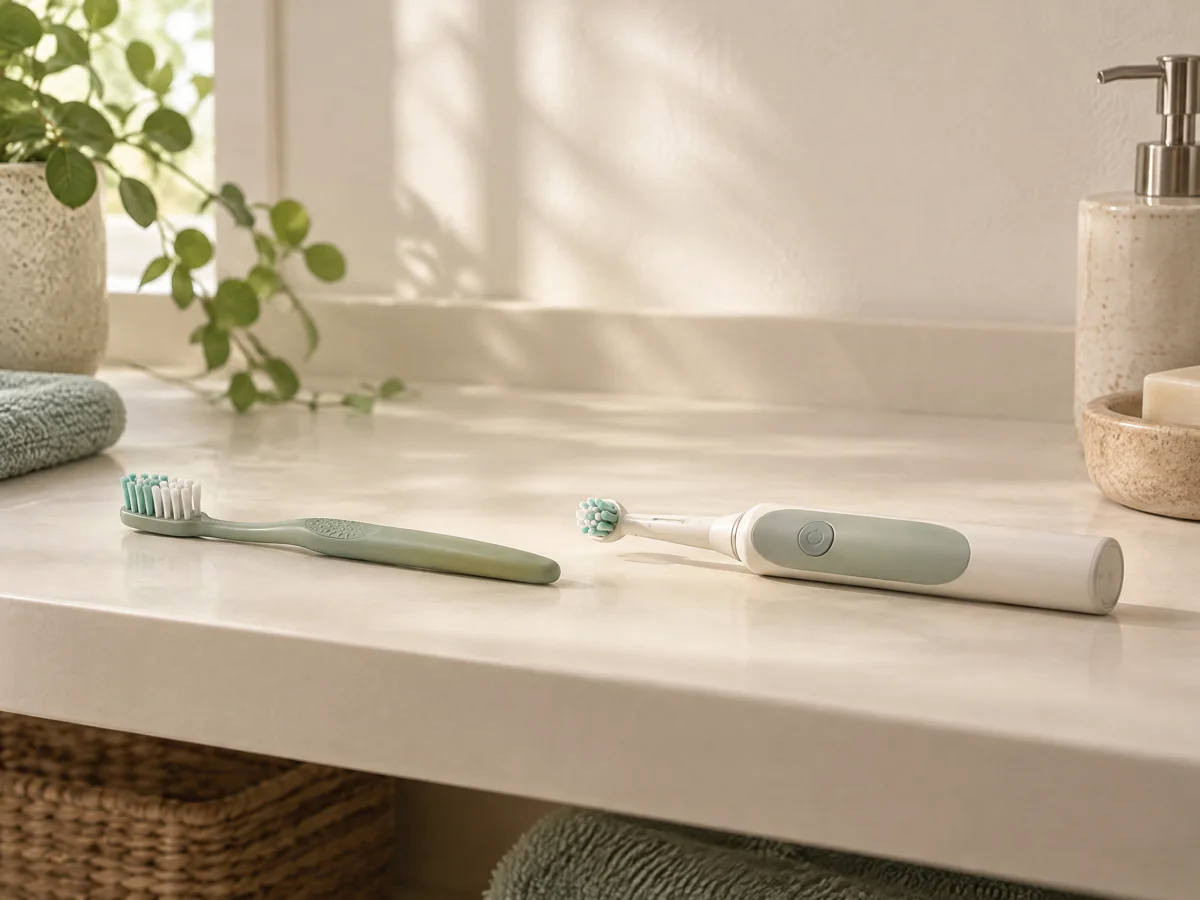
You don't have to choose a toothbrush by the longest list of features on the box. If you're wondering whether an electric brush would make your daily routine easier, start with what you can comfortably hold, where you struggle to reach and what your dentist has noticed about your teeth and gums.
The short answer: both manual and electric brushes can be used for daily cleaning. Healthdirect recommends a small head, soft bristles and careful technique. At Joyner Family Dental, your check-up includes individual brushing and flossing advice, so you can ask about your own brush rather than buying one on guesswork. Healthdirect's brushing guidance and our check-up and clean page explain these starting points.
Does everyone need an electric toothbrush?
No. The Australian Dental Association (ADA) says how well a toothbrush cleans depends on how well you use it. Its guidance describes benefits from powered brushes for removing bacteria and reducing gum inflammation compared with manual brushing, but that is not a promise about an individual person's teeth. Your technique and ability to reach the surfaces still matter. Read the ADA's comparison of manual and electric brushes.
That distinction helps when a product advertisement makes an upgrade sound compulsory. Ask a more useful question: what problem would switching solve for you? Perhaps you lose track of brushing time, find small hand movements difficult or cannot reach a particular area comfortably. Tell your dentist about that practical difficulty. A recommendation should fit your mouth and your routine, not just the product category.
The ADA identifies difficulty holding and controlling a manual brush, braces and gum disease as situations in which a dentist may recommend an electric one. Those are reasons for an individual discussion, not reasons to diagnose yourself or assume that buying a brush treats a gum condition. If something has changed in your mouth, mention the change when you arrange an appointment.
What should I compare before choosing?
Compare the features that help you follow the cleaning advice you have been given. Healthdirect recommends a small head and soft bristles for either type, and notes that some people find an electric brush easier to use. The table below turns that guidance into questions you can take to your dentist; it is not a ranking of brands or a treatment recommendation.
| What you notice | What to ask or check |
|---|---|
| The head feels too large | Look for a small, soft-bristled head and ask your dentist to show you how to reach the inside and back surfaces. |
| You struggle to control the handle | Ask whether a powered brush would make guiding the head easier for your particular needs. |
| You lose track of time | Compare a built-in two-minute timer with using a separate timer you already have. |
| Your bristles spread out quickly | Ask for a pressure and technique check. A pressure warning is a feature on some electric brushes, not a substitute for advice. |
| You are mainly worried about symptoms | Arrange a dental assessment rather than treating a new brush as the answer to pain, sensitivity or bleeding. |
The ADA's electric toothbrush guide explains that some models have timers and pressure sensors. Check the actual model rather than assuming every powered brush includes them. Before purchasing, you can also check whether compatible replacement heads are available and whether keeping it charged will fit your routine. These are shopping considerations, not clinical advantages claimed for a particular product.
Do I use the same movement with each brush?
No. Healthdirect describes gentle circles for a manual brush and slowly guiding an electric brush along the teeth. It also advises cleaning the inside, outside and chewing surfaces, including the gumline. An electric motor does not tell you which surface you have missed. See Healthdirect's instructions for both types.
If you are changing brushes, bring the new one or a clear photo of its head to your next appointment. Ask your dental practitioner to explain the movement and angle for that brush. You can say, "Could you show me where to place this head around the back teeth?" That is more specific than asking whether your brushing is generally good.
With either type, pressing harder is not the goal. The ADA warns that excessive pressure can damage teeth and wear the bristles. If you notice the bristles spreading, ask someone to check your technique rather than simply replacing the brush with a firmer one. A sensor can alert you to pressure on models that include one, but it cannot assess the health of your gums.
What stays the same whichever brush I choose?
The basic routine stays the same: brush twice a day for two minutes, use fluoride toothpaste and clean between your teeth each day. The ADA and Healthdirect both emphasise the time spent cleaning and the areas reached, rather than treating the handle or motor as the whole routine.
Healthdirect's dental care guide, last reviewed in November 2024, says: The way you use your toothbrush is just as important as the type you have.
That is a useful sentence to keep beside any comparison of features. Its guidance also says to spit out toothpaste, avoid swallowing it and avoid rinsing with water afterwards, so fluoride remains on the teeth for longer. Read the full daily-cleaning guidance.
A two-minute timer gives you a time check, not a coverage check. The ADA suggests dividing brushing between four corners of your mouth, spending about 30 seconds in each. Use the signal as a reminder to move around systematically, including the inner surfaces, rather than repeatedly cleaning the same front teeth until the timer ends.
Does an electric brush mean I can stop flossing?
No. Neither type replaces cleaning between your teeth. The ADA explains that toothbrush bristles cannot reach the spaces between teeth, even when you brush carefully. Healthdirect describes floss, dental tape, flossettes, interdental brushes and water flossers as options for cleaning those spaces. See Healthdirect's section on dental flossing.
If floss catches, is difficult to hold or seems awkward around your dental work, describe the specific difficulty rather than abandoning that part of the routine. Ask your dental practitioner which method suits those spaces and to demonstrate it. The appropriate approach may need to take account of your teeth and any existing restorations; this article cannot choose a device or size for you.
At Joyner Family Dental, our published check-up process includes personalised brushing and flossing advice. That is an opportunity to work on the part of home care you find hardest, whether you stay with a manual brush or switch to electric.
When should I replace the brush or head?
Healthdirect recommends replacing a toothbrush or toothbrush head every three months, or when it looks worn. For a powered brush, this refers to the replaceable brushing head rather than automatically replacing the entire handle. The ADA also advises watching for bristles spreading apart. Read the ADA's replacement and pressure advice.
A calendar reminder can help you remember to check the head, but look at its condition as well. If it becomes visibly worn well before your reminder, bring that observation to your dentist. You can discuss pressure and technique instead of assuming wear is simply unavoidable. Keep the product's own care instructions for charging and maintenance separate from your clinician's advice about your mouth.
When is a dental appointment more useful than shopping?
If you have toothache, facial swelling, sensitivity with eating or drinking, or trauma to your teeth, Healthdirect advises seeing your dental practitioner immediately. Its guide also identifies bleeding with brushing, flossing or eating as a sign of gum disease. Do not rely on a new toothbrush to explain or treat those symptoms. Read Healthdirect's advice about when to see a dental practitioner.
Professional cleaning and home brushing also do different jobs. Healthdirect explains that calculus, often called tartar, cannot be removed by brushing at home. Our general dentistry information and check-up page describe assessment and professional care. A product comparison should not replace that conversation if you are worried about something you can feel or see.
What should I bring and ask at Joyner?
Bring the details that make your question specific. Joyner's published check-up process begins with medical history and medicines, uses an intraoral camera to explain findings and includes discussion of recommended care and written further-treatment costs. These are our existing visit steps, not a separate toothbrush consultation package.
- Bring your current brush, its head or a clear photo, so you can explain what you use.
- Note whether your concern is grip, reach, time, pressure or a symptom. Tell the team about symptoms when booking.
- Have your medicine list and relevant medical-history details ready for the history discussion.
- Ask for a demonstration of the movement and angle for the type of brush you use.
- Ask how to clean between your teeth and whether your current method suits the areas you struggle with.
- Ask what follow-up is appropriate for your findings rather than choosing your own recall interval from a product guide.
You can call 07 4588 8888 and say, "I'd like to arrange a check-up and ask whether my current toothbrush and technique suit me." Our contact page asks you to call first to confirm appointment availability and opening hours. If you have pain or another symptom, mention it before discussing a routine appointment.
Sources and scope
Sources checked 1 November 2026. This is general published information for adults, not individual advice or a recommendation for a particular brand. Your dental practitioner can advise on your own teeth and gums. No clinical review is claimed from author attribution.
- Australian Dental Association: Brushing teeth — technique, brush selection, replacement and interdental cleaning.
- Australian Dental Association: How to brush with an electric toothbrush — timer and pressure sensor features.
- Healthdirect: Dental care and teeth cleaning, reviewed November 2024 — daily care and assessment guidance.
- Joyner Family Dental: Check-up and clean, our dentists and contact — clinic process, author identity and telephone.
Photos in this article are AI-generated illustrations, not photos of Joyner Family Dental, its staff or patients.